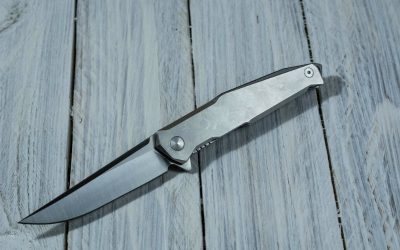
A Kershaw automatic knife is a one-hand pocketknife that deploys its blade instantly through an internal spring mechanism activated by a button, rather than requiring manual assistance to open. These knives are built around push-button firing systems paired with premium blade steels, making them a common choice for people who want fast, repeatable one-handed opening.
Kershaw has built a reputation on pairing accessible automatic mechanisms with steels more commonly found on higher-end folders. Shoppers researching Kershaw Automatic Knives will typically find models organized by blade length, state-legal compliance, and handle material, which reflects how the brand segments its automatic lineup for different carry needs and regional regulations.
How the Automatic Mechanism Works
Kershaw’s automatic knives rely on an internal spring that releases tension when a button on the handle is pressed, driving the blade open without any manual flicking or wrist motion.
Key mechanical traits across the lineup include:
• Push-button deployment with a locking release built into the same button
• A firing button positioned for ambidextrous use on many models
• A tip-up pocket clip, often reversible for left or right-hand carry
• A low-profile button design intended to reduce accidental deployment
Several Kershaw models, including the Launch 12, use this same push-button open and push-button lock release pairing, with a low-profile button described as making it harder for the blade to accidentally deploy. This consistency across the Launch series means the learning curve for operating one model typically transfers to others in the line.
Blade Steel and Handle Material Differences
Material selection is where Kershaw automatics distinguish themselves from budget automatic knives. Most Launch-series models are built around CPM 154, a powdered metallurgy steel.
Across the lineup, Kershaw notes that CPM 154 takes and holds an excellent edge while providing corrosion resistance, wear resistance, and toughness for all-around cutting performance. That combination of properties is why the steel appears repeatedly across different Launch models rather than being reserved for a single flagship knife.
Handle construction also varies by model:
|
Model |
Blade Steel |
Handle Material |
Notable Feature |
|
Launch 1 |
CPM 154 |
Anodized aluminum |
BlackWash finish hides use scratches |
|
Launch 4 (CA Legal) |
CPM 154 |
Aluminum / G-10 options |
Sub-2-inch blade for compliance |
|
Launch 10 |
CPM 154 |
6061-T6 anodized aluminum |
Curved “claw” blade shape |
|
Launch 12 (CA Legal) |
CPM 154 |
Aluminum with carbon fiber insert |
Slim stiletto-style profile |
Some models add coatings like DLC or Cerakote for added corrosion resistance and a distinct finish, which is a detail worth checking against the listed specifications before buying, since finish affects both appearance and long-term wear characteristics.
Legal Considerations for Automatic Knife Ownership
Automatic knife laws differ significantly by state, and blade length is often the deciding factor in whether a specific model can be legally carried. For example, California limits automatic knife blades to under two inches for purchase and carry, which is why several Kershaw Launch models are produced specifically as California-legal variants with shorter blades.
Buyers should always confirm current rules for their own state before purchasing, since several states have recently updated their switchblade statutes. According to the National Conference of State Legislatures, knife possession and carry regulations are set at the state level and can change through new legislation, so relying on outdated information can create legal risk. Federal shipping rules also apply separately from state ownership laws, since automatic knives cannot be shipped through the United States Postal Service.
Choosing Between Models
Selecting a specific Kershaw automatic often comes down to balancing blade length against local legal limits, then matching handle material to intended use.
• Compact, sub-2-inch models suit everyday carry in states with strict length limits
• Larger drop-point or trailing-point blades favor utility and general cutting tasks
• Carbon fiber or G-10 handle inserts add grip texture over plain anodized aluminum
• Reversible pocket clips matter for left-handed carry preferences
Reviewing specifications for blade length, steel type, and handle composition before purchase helps match a knife to both legal requirements and daily use expectations.
Frequently Asked Questions
What steel do most Kershaw automatic knives use? Many Launch-series models use CPM 154, a powdered metallurgy steel known for edge retention and corrosion resistance, as reflected across multiple product listings.
Are Kershaw automatic knives legal to carry everywhere? No. Legality depends on state law, and some states impose blade length limits, such as California’s requirement that automatic blades stay under two inches for carry and sale.
Can Kershaw automatic knives be shipped by mail? Automatic knives cannot be shipped through the United States Postal Service under federal law, so retailers typically use alternative carriers for these items.
Why do some models have carbon fiber handle inserts? Carbon fiber adds texture and visual contrast while keeping the handle lightweight, which is why it appears as an insert option on models like the Launch 12.
Kershaw automatic knives combine push-button mechanisms with steels like CPM 154 to deliver consistent, fast-opening performance across a range of handle materials and blade profiles. For buyers researching specific models, comparing steel type, handle construction, and state-legal blade length remains the most reliable way to narrow down options. Those browsing current inventory and state-compliant variants can review listings directly through Blade City, which carries a range of Kershaw automatic models organized by legal carry status and material specification.